
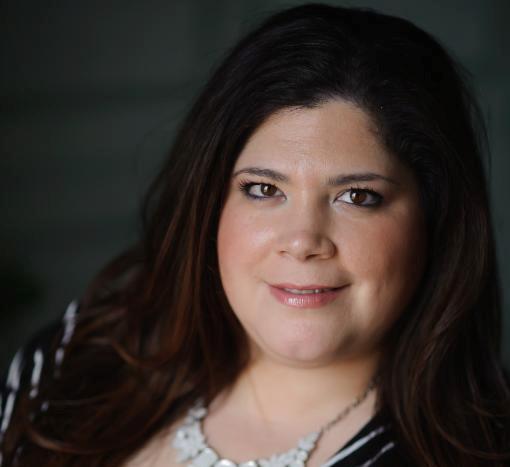
Cheryl Feldman
Salesforce Trailhead
More than 20 years ago, Oracle executive Marc Benioff believed companies of all sizes, not just large companies, needed an information technology platform to drive their future success. He teamed up with three colleagues and successfully pitched his idea to investors, which included Oracle boss Larry Ellison. The company Salesforce was founded in 1999, offering a Customer Relationship Management (CRM) software system to potential users. The company knew from the start it needed to train both its own and its customers’ workers in the system, and more recently realized it could exploit that training through a new division called Trailhead, launched in 2014. In this article, I will describe how Trailhead is already challenging fundamental assumptions in Human Resource Management. In a future article, I will argue Trailhead is sponsoring a new kind of space, a “career ecosystem,” in which to host participants’ careers.
From the outset, the Salesforce founders’ egalitarian values and their desire to cast a wide net meant that people of any age, from anywhere and any background, could sign up for free training. Upon completing a course, a participant could sit an exam to qualify for a corresponding certificate. Each certificate testified its holder had learned a matching range of skills, that could be applied in either the Salesforce organization or one of its customers. In turn, workers could demonstrate growing levels of proficiency through a comprehensive certification system.
The approach worked well enough until 2014, when Salesforce saw a wider opportunity. Salesforce was still expanding its software product and adding new learning material. However, there were other skills frequently sought both inside and outside the Salesforce organization that reached beyond direct use of its own software. New courses in soft skills (e.g. empathy, leadership) and practical skills (e.g. public speaking, project management) could help employees in Salesforce’s and its customers’ field offices around the world to gain added value from the Trailhead platform. In 2019, a further “myTrailhead” option was made available for customers to offer additional training for their own staff through the Trailhead platform.
I was introduced to two Salesforce specialists, both employees of customer organizations, to explore how Salesforce training was working out for them. One got started back in 2001, soon after Salesforce went public. The other joined in more recently, in 2016. Each of their stories is remarkable in its own way.
Cheryl Feldman was a young New York hairdresser in 2001 when she tore her right rotator cuff and was advised to look for a different line of work. The owner of the salon gave Cheryl a temporary position in secretarial work, where she figured out how to use the Microsoft Access database system. When the temporary position closed, the owner recommender to her husband, the VP of Manufacturing in a large healthcare company, that he employ Cheryl. The VP soon had her spending “four days a week working with five different systems” to deliver a weekly Friday report using data already a week old. She asked “Wouldn’t it be great to get all this into one live report?” Her boss had her work with a team of consultants to figure out how to do that, and a Salesforce system was installed with Cheryl as the Salesforce manager.
The boss left, and his successor wanted to move the Salesforce application into the company’s IT department. However, Cheryl was told she was not welcome in that department because it required its employees to hold a college degree. She interviewed with a wide range of prospective employers and heard the same story. Deeply discouraged but still persistent, she interviewed with a start-up and asked “What’s your biggest problem?” The interviewer told her his problem, and agreed to hire her if she brought back the solution the next day. She did, so he did.
By this time it was 2005, and Cheryl was told about a New York Salesforce Users’ Group that was soon a professional home for her. She began attending meetings, became a protégé of the leader, and took over from the leader in calling and managing monthly meetings after he left the city in 2007. In 2011, a Standard and Poor’s executive heard her speak and said “We need you!” Her boss insisted she accept the opportunity, joking “If you don’t take that job I will fire you!” Almost ten years later she is still in financial services, currently as VP in Business Analysis at JPMorgan Chase. She is also taking firm advantage of the wider opportunities through the Trailhead platform as an “MVP Trailblazer” – someone providing exceptional leadership, knowledge and ongoing contribution to the Trailhead learner community. More on that later.
Brian Owens
Salesforce Trailhead
Brian Owens first…


